E.E. Ward Moving & Storage
The professional mover's guide to how to move heavy furniture without breaking your back

Moving heavy furniture safely is less about brute force and more about adopting a systematic, professional approach. By using the right tools like sliders and dollies, conducting a path audit, and communicating clearly, you can eliminate most risks, protecting both your belongings and your back from injury.
The Hidden Risk in Every DIY Move
For most people, the thought of moving a solid wood armoire or a king size mattress brings on a familiar dread—not just for the effort, but for the very real risk of injury. It's a risk that's often underestimated. In fact, over 36% of workplace injuries requiring days off stem from shoulder and back injuries, with overexertion and improper lifting being the primary culprits according to the Bureau of Labor Statistics. The classic advice to "lift with your knees" is just the tip of the iceberg.
At E.E. Ward, with a legacy of moving that began in 1881, we've learned that the secret to safely moving heavy furniture isn't about being stronger. It's about being smarter. The true professionals—the ones who do this day in and day out without injury—transform a high-risk task into a predictable, manageable process. They don't rely on strength; they rely on a system. This guide will walk you through that exact system.
Beyond 'Lift With Your Knees': Applying the Hierarchy of Controls
In occupational safety, the most effective way to prevent injury is to eliminate the hazard altogether. The same principle applies to moving. Before you even think about manual handling, your first question should be: "How can I move this without lifting it?" This is where the right moving supplies and a little leverage and fulcrum science make all the difference.
A key technique for safely moving heavy pieces involves using the correct tools and equipment to minimize physical strain as advised by moving experts. If you have a 200 lb dresser, don't just grab a side and heave. First, make it lighter. Take out all the drawers. Then, instead of lifting, make it slide. This is where furniture sliders are invaluable. You can get felt pads for hardwood floors or plastic carpet sliders for carpeted surfaces. Just place them under each corner and you’ve transformed a deadlift into a smooth push.
For even heavier items like a refrigerator or a solid wood bookshelf, you need to escalate your equipment. Here’s a quick guide:
- Furniture Dolly: This is a simple, flat platform with four caster wheels. It's perfect for moving large, flat-bottomed items like a dresser or boxy pieces of furniture.
- Appliance Dolly or Hand Truck: This L-shaped tool is essential for tall, heavy items like moving a refrigerator. It often includes built-in ratchet straps to secure the item and sometimes has stair-climbing dolly features to help navigate stairs.
- Lifting Straps (e.g., Forearm Forklift, Shoulder Dolly): These straps use leverage to make heavy items feel significantly lighter. They are excellent for a two-person lift on pieces that a dolly can't easily get under, like a large couch or mattress.
By prioritizing sliding vs. lifting and using mechanical aids, you’ve already eliminated the most dangerous part of the job. You’re no longer fighting gravity; you’re working with physics.
Conducting a Pre-Move 'Path Audit'
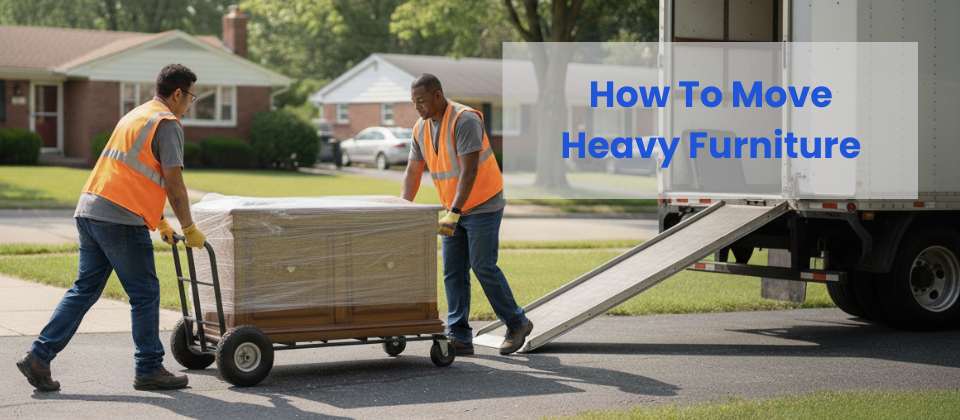
Professional movers don't just show up and start moving. They begin with a crucial survey of the environment. Before the first piece of furniture is touched, you must conduct a "path audit" to identify and mitigate every potential hazard along the route from its starting place to the moving truck ramp.
This systematic review involves walking the entire path, room by room. A crucial first step is to plan ahead by measuring doorways, hallways, and staircases to ensure the furniture can pass through as moving experts advise. There's nothing worse than getting a couch stuck in a stairwell. You need to identify tight corners and plan your pivot a couch strategy in advance, often using the high-low method where one person carries the end high and the other low.
Your path audit checklist should include:
- Clearing a Path: Remove all obstacles. This means area rugs, shoes, kids' toys, and anything else that could become a trip hazard.
- Floor Protection: Note the type of flooring. You don't want to be scratching floors. Put down protective runners or cardboard on delicate hardwood floors.
- Door and Wall Protection: Use corner guards on sharp wall edges and door jamb protectors on the frames of doorways you'll be passing through frequently. A simple strip of painter's tape can make a corner more visible and prevent scuffs.
- Stair Assessment: Navigating stairs is one of the most dangerous parts of a move. Check for any loose steps or handrails. Ensure the area is well-lit.
This audit isn't just about preventing damage to your property; it’s about creating a safe and predictable environment for the move itself.
How to 'Narrate the Move': The Power of Communication
Once you've exhausted mechanical aids and must perform a team lift, communication becomes your most important tool. A silent lift is a dangerous lift. Missteps, sudden shifts in weight distribution, or uncoordinated movements are how accidents happen. This is why commercial moving companies have adopted strict communication protocols. For instance, in response to high injury rates, American Furniture Warehouse implemented a safety protocol where employees must team lift heavy items, narrate each step before lifting, and communicate continuously during the process according to an OSHA success story.
This is what "narrating the move" looks like in practice. For every single furniture step, you and your partner should be talking.
- Before the Lift: "Okay, we're lifting this bookshelf on the count of three. I have the left side, you have the right. We'll go straight back three feet, then turn left toward the door. Ready? One... two... three... lift."
- During the Move: "Small step down here. Watch the corner on your right. I need to adjust my grip, let's set it down for a moment. Okay, ready to go again."
- At the Destination: "We're approaching the truck. We will place it down on three. Lowering slowly... one... two... three... down."
This constant stream of information ensures you are both perfectly synchronized. It removes guesswork and allows for immediate course correction, which is critical for back safety and damage prevention.
Thinking in Systems, Not Steps: Your Moving Day Program
The final layer of the professional process is to stop thinking of a DIY moving project as a series of disconnected tasks and start seeing it as a single, integrated system. This means creating a programmatic approach, even for a one-day move.
Your system should include:
- Preparation and Protection: Properly padding furniture is non-negotiable. Use moving blankets to wrap every piece of solid wood furniture. Secure the blankets with stretch wrap or tape to create a protective cocoon. For fragile items, bubble wrap is a must.
- Disassembly: As we mentioned with the dresser, always look for opportunities to disassemble furniture. Removing drawers, taking legs off tables, or separating bed frames makes pieces lighter and less awkward.
- Equipment Checks: Before you use a dolly or lifting straps, inspect them. Make sure the wheels on the hand truck are properly inflated and that there are no frays in your straps. This is your personal protective equipment (PPE).
- Planned Breaks: Don't try to power through. Fatigue leads to mistakes. Schedule 10-minute breaks every hour to rest and rehydrate.
- A 'Stop and Correct' Mindset: If something feels off—a piece of furniture is slipping, the path is blocked, or someone is losing their grip—the immediate response should be to stop. Set the item down safely and fix the problem. Don't try to muscle through it. This also applies if a box is too heavy to lift by yourself; don't risk it. Use a dolly or repack it into smaller boxes.
Choosing Your Moving Strategy: A Head-to-Head Comparison
Understanding your options is key to a successful move. Here’s how the different approaches stack up against the factors that matter most.
Approach 1: Brute Strength / Unplanned DIY Approach
Personal Safety: Very high risk. This approach is a primary cause of back injuries, strains, and falls. The focus is on muscle, not technique, which is an unreliable and dangerous way to move heavy items.
Damage Prevention: Low. Without proper equipment like moving blankets or floor protection, scratching floors, denting walls, and damaging the furniture itself is almost inevitable.
Efficiency: Inefficient. Time is wasted struggling with awkward items, getting stuck in doorways, and making multiple trips due to poor planning. Fatigue sets in quickly, slowing the process down.
Stress Reduction: Very high stress. The entire day is reactive and unpredictable, filled with anxiety about potential injury or damage. It often leads to arguments and frustration.
Approach 2: Systematic Safety Protocols & Planning
Personal Safety: Significantly higher. By using tools to eliminate lifting, auditing the path, and communicating clearly, the risk of personal injury is dramatically reduced.
Damage Prevention: High. A systematic approach includes dedicated steps for protecting furniture and property, like using corner guards, padding furniture, and wrap techniques.
Efficiency: High. Planning ahead, disassembling items, and using the right equipment like an appliance dolly means each piece is moved correctly and quickly the first time.
Stress Reduction: Low stress. The move becomes a predictable process. You have a plan, the right supplies, and safety protocols, which fosters confidence and control.
Approach 3: Professional Moving Services
Personal Safety: Highest level of safety. You are completely removed from the physical labor and risk. The moving company assumes all responsibility for the safe handling of items.
Damage Prevention: Highest level. Professional movers are equipped with all necessary moving supplies and are trained in advanced techniques. They are also insured, providing a financial safety net.
Efficiency: Maximum efficiency. An experienced crew can complete a move in a fraction of the time it would take for a DIY effort. This is their full-time job.
Stress Reduction: Lowest stress. The mental and physical burden of planning and execution is offloaded to experts, freeing you to focus on other aspects of your move.
Making the Right Choice for Your Needs
There is no single "best" way to move; the right choice depends entirely on your priorities, budget, and circumstances.
- For The DIY Mover: If your primary goal is to save money but you're rightfully concerned about safety and damage, adopting the systematic approach outlined here is your best path. Invest in renting the right equipment like a furniture dolly or hand truck, create a moving checklist, and strictly follow the communication and safety protocols. The small investment in rented equipment will pay for itself in injury and damage prevention.
- For The Corporate/Office Manager: Your priorities are efficiency, predictability, and minimizing downtime. A professional moving company is almost always the correct choice. They can provide a detailed plan, execute the move quickly and safely outside of business hours, and ensure valuable office equipment is handled with the appropriate care and insurance coverage.
- For The Family Caregiver: When helping an elderly relative move, the top priorities are reducing their stress and ensuring sentimental items are treated with the utmost respect. The emotional toll of a move can be immense. Hiring trustworthy, professional movers provides peace of mind. A full-service moving company that offers unpacking services can make the transition seamless and far less overwhelming for your loved one.
Ultimately, moving heavy furniture safely is a solvable problem. It requires shifting your mindset from one of brute force to one of systematic planning and control. For those who value a proven system and the ultimate peace of mind that comes from over 140 years of experience, the team at E.E. Ward is here to help. If you're looking for an experienced, reliable moving company in the Columbus, Ohio area, contact us today for a transparent assessment and a free quote.

Get a Quick Estimate For Your Upcoming Move!
We are here to help! Fill out our Quick Moving Estimate inquiry form and our team will contact you soon with a free estimate. Contact the office moving company with over a century of moving experience. Whether it’s a local downtown move or long-distance relocation — including business moves — we’re ready to help.
