E.E. Ward Moving & Storage
The modern long distance moving checklist for America's high-demand destinations


A standard long distance moving checklist is no longer sufficient. To successfully navigate today's competitive landscape, especially when relocating to popular states, you need a strategic plan that accounts for increased competition, higher costs, and longer timelines, starting as early as six months in advance to ensure a smooth process.
Beyond Boxes and Tape: Why Today's Migration Trends Demand a New Approach
The very idea of a cross country move has transformed in the last decade. It’s no longer just about packing boxes and hiring a truck; it’s about navigating a highly competitive landscape. Approximately 8.2 million people moved between states in 2022, a continuation of a powerful trend that has strained the resources of the entire moving industry. This mass migration means more families are competing for the same professional movers, moving truck rental options, and self-storage unit availability, especially during peak seasons.
In this new environment, relying on a generic, one-size-fits-all moving checklist is like using a road map from the 1990s to navigate today's highways. It simply doesn't account for the current traffic, detours, and tolls. A modern, strategic plan is essential to help you make it to your new home without costly delays and unnecessary stress. Let's compare the two approaches.
Generic Checklists vs. Strategic Plans
A generic checklist found online can be a starting point, but its limitations become apparent quickly in a long distance moving scenario. It might remind you to start packing six weeks out and get moving company quotes, but it fails to address the critical market dynamics at play.
A strategically tailored plan, on the other hand, is a comprehensive relocation guide built for reality. It forces you to think like a logistician, considering market demand, regional cost differences, and the necessity of booking services far earlier than you might expect. It’s the difference between hoping for a smooth move and engineering one. While it requires more research upfront, this diligence pays dividends by protecting your budget and your peace of mind.
From 8 Weeks to 6 Months: Re-Architecting Your Moving Timeline
The most significant flaw in outdated checklists is the timeline. The traditional eight-week countdown is obsolete for an interstate moving project. In today’s high-demand market, the most reputable state to state movers are often booked months in advance, particularly for moves to popular areas. We recommend starting the process at least six months before your target moving day.
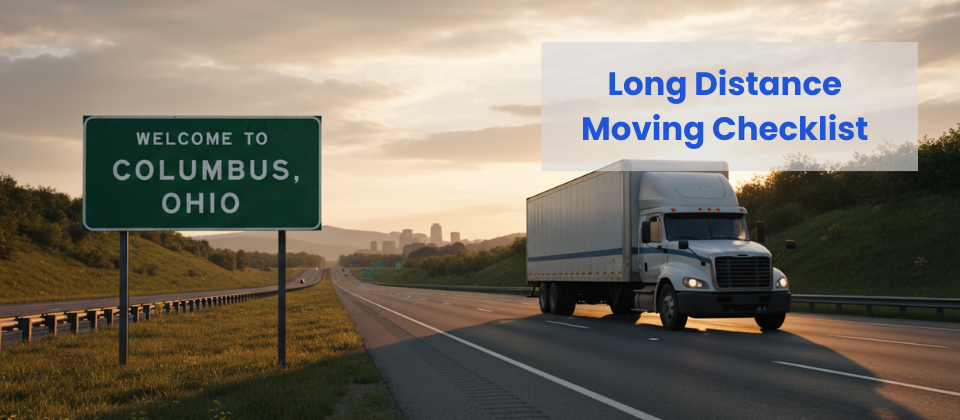
Long distance moving truck traveling on a scenic road leaving Columbus.
The 6-Month Horizon: The Strategic Planning Phase
This is the time for research and budgeting. Your first step is to create a detailed moving budget calculator to understand the potential cost of long distance movers. Do you need a full-service company, or will a DIY approach with a Penske Truck Rental suffice? The estimated cost for a long-distance move using full-service movers ranges from $4,000 to $9,000, a significant investment. This is also the perfect time to begin decluttering before a move. Go through every room and decide what to keep, sell, or donate. The less you have to move, the more you save.
The 4-Month Mark: Booking and Logistics
With your budget established and your inventory trimmed, it's time to lock in your moving service. Begin soliciting quotes from reputable professional movers. Look for companies with a valid U.S. Department of Transportation (USDOT) Number to avoid moving scams. If you are considering a major carrier network like Mayflower Transit or Atlas Van Lines, this is the time to get a binding estimate. For a complex cross country move, especially one involving specialized services like vehicle transport or in-transit storage, booking this far in advance is non-negotiable.
The 2-Month Countdown: Detailed Organization
Now the physical preparation begins. Start gathering your packing supplies, including sturdy moving boxes, packing paper, bubble wrap, and specialized wardrobe boxes. Create a meticulous moving inventory list, documenting every item you plan to move and its condition. This list is not just for your own organization; it's a critical document for your moving contract and any valuation coverage you select. Begin the packing process with items you don't use daily, like books, seasonal clothing, and decorative items.
The Final Month: Execution and Finalization
This month is about details. Confirm all arrangements with your moving company and ensure you understand the terms of your Bill of Lading. Pack an essentials box, or moving day survival kit, with items you'll need immediately upon arrival at your new home: toiletries, medications, a change of clothes, important documents, and basic tools. This is also the time to complete your change of address with the USPS, schedule the transfer of your utilities, and arrange for medical records transfer and school records transfer if you're moving with kids. Your goal is to have everything packed and ready at least a few days before the movers arrive.
The 'High-Inmigration' State Checklist: A Guide for Popular Destinations
Relocating to a high-demand state like Florida or Texas presents a unique set of challenges that a standard checklist rarely addresses. In fact, the two largest state-to-state migration flows in 2022 were from California to Texas and from New York to Florida. If you're part of this trend, your planning must be even more rigorous.
- Securing Housing Early: The real estate and rental markets in these boom regions are incredibly competitive. You may need to secure housing sight-unseen, relying on virtual tours and local contacts. Have your financial documents ready to apply for a rental or make an offer on a home instantly. Expect higher-than-average security deposits and first/last month's rent requirements.
- Booking All Services in Advance: Competition isn't just for movers. Car shipping services, storage solutions, and even handymen for your new home will be in high demand. Book everything as early as possible to avoid scarcity-driven price hikes and scheduling conflicts.
- Navigating Local Bureaucracy: Once you arrive, you'll need to establish residency. Research the process for getting a new driver's license, completing your voter registration, and understanding local tax laws before you even pack your first box. This preparation will make setting up your new life a much smoother process.
Budgeting for the Boom: Planning for the Hidden Costs of a Cross Country Move
A common question we hear is, "Is $5000 enough to move cross country?" The answer depends heavily on your choices and destination. While $5000 might cover a small DIY move using moving pods or a rental truck, it falls on the low end for a full-service move of a multi-bedroom home. Moreover, the quote from your moving company is only one part of the financial picture, especially when moving to a popular area.
High demand creates scarcity, which in turn drives up prices for everything from moving blankets to the moving labor needed to load your truck. Be wary of online moving brokers who promise to find you a carrier. While they can seem convenient, consumers may pay up to 40% more in brokerage fees. It is always better to work directly with an established moving company.
Beyond the move itself, anticipate higher initial living costs. Landlords in competitive markets may require larger deposits, and utility companies might have higher setup fees. Always build a contingency fund of 15-20% of your total estimated moving cost into your budget. This buffer will cover the unexpected expenses that inevitably arise during a complex long distance moving project, from travel delays to needing to replace items that don't fit in the new space.
Answering Your Key Moving Questions
Drawing from our decades of experience, here are straightforward answers to some of the most common questions we encounter during the long distance moving process.
How to prepare for a long-distance move?
The best preparation is strategic, long-term planning. Start at least six months out by creating a detailed budget and timeline. The most crucial step is to declutter ruthlessly; do not pay to move items you no longer need or want. Research and vet your moving company thoroughly, ensuring they are a licensed carrier, not a broker. Finally, create a comprehensive moving inventory list. These actions form the foundation of a successful, low-stress move.
What is the hardest room to pack when moving?
Overwhelmingly, the kitchen is the most challenging and time-consuming room to pack. It contains a high volume of items of varying shapes, sizes, and fragility—from delicate wine glasses to bulky appliances. Packing the kitchen requires more boxes, more packing paper, and more strategic thinking than any other room in the home. It’s often the last room people want to tackle, but starting on it early can significantly reduce last-minute stress.
What will packers not pack?
For safety and liability reasons, professional packing services have a list of non-allowable items. Movers will not transport hazardous materials, which include things like paint, cleaning supplies, aerosol cans, propane tanks, and ammunition. They also will not move perishable items like food from your refrigerator or freezer. Most importantly, you should always personally transport high-value items and critical personal documents. This includes jewelry, cash, passports, birth certificates, and medical records. Keep these irreplaceable items with you at all times.
Decoding Your Move: Key Factors for Your Decision
Choosing the right approach for your move involves balancing several critical factors. Interstate moves require more planning than local moves, and your specific needs will determine the best path forward.
Cost vs. Convenience (DIY, Hybrid, Full-Service)
A full DIY move using a U-Haul or similar rental truck offers the lowest upfront cost but demands the most physical effort and logistical planning from you. A hybrid option, like using moving pods (e.g., PODS) or freight trailer moving, balances cost and convenience by having you pack but letting professionals handle the transportation. A full-service move is the peak of convenience, with a professional team handling everything from packing to unpacking, but it comes at the highest price point.
Timing of the Move (Peak vs. Off-Peak Season)
The moving industry has a distinct peak season, running roughly from May through September. Moving during this time means more competition and higher prices. Planning a move during the off-peak season (October to April) can result in lower costs and greater availability of movers and services. If you have flexibility, scheduling your move during these months is one of the most effective cost-saving strategies.
Selection of Specialized Services
Your move might require more than just transporting boxes. Do you need vehicle transport for a second car? Do you have a gap between leaving your old home and moving into your new one that requires in-transit storage? Do you have artwork, antiques, or a piano that requires custom crating? Identifying the need for these specialized services early will help you choose a moving company equipped to handle your entire project.
Logistical Complexity
The sheer distance of your move, combined with the total volume and weight of your belongings, defines its complexity. A move from New York City to a rural town in Montana is logistically more challenging than a move between two major suburban areas. Special requirements, like navigating a narrow city street or dealing with a multi-story apartment building with no elevator, add layers of complexity that a professional moving service is best equipped to manage.
Making the Right Choice for Your Needs
There is no single "best" way to execute a long distance move. The optimal choice depends entirely on your personal priorities, budget, and circumstances.
For the Budget-Conscious Planner:
Your goal is to find the cheapest way to move cross country without sacrificing the safety of your belongings. Focus heavily on decluttering to reduce the volume you need to transport. You will benefit most from a DIY or hybrid approach. Price out rental trucks and moving pods, and handle all the packing yourself. Schedule your move for the middle of the week in an off-peak month like January or February to secure the lowest possible rates.
For the Overwhelmed Family:
Your priority is a seamless, stress-free transition for you and your children. A full-service moving company is your best investment. The value of professional packing services and unpacking services cannot be overstated—it frees you to focus on your family's emotional needs during a major life change. Look for a company that offers full value protection and acts as a single point of contact to manage every detail, ensuring you can start enjoying your new home from day one.
For the Corporate Relocator:
You need efficiency, reliability, and clear documentation for your employer. Your best choice is an established, reputable moving company with a national network and a proven track record. Prioritize services that offer clear, itemized invoicing for easy expense reporting. Your move may require a combination of specialized services, like short-term storage solutions and car shipping, so choose a provider that can manage all these logistics under one contract for a streamlined, professional experience.
Ultimately, a successful long distance move in today's demanding market is the result of careful, early planning and choosing a partner you can trust. With over 140 years of experience in helping families and businesses navigate the complexities of interstate relocation, E.E. Ward Moving & Storage, based in Columbus, OH, understands how to deliver a reliable, seamless moving experience. For a personalized assessment of your needs and a comprehensive quote, contact our team of relocation experts today.

Get a Quick Estimate For Your Upcoming Move!
We are here to help! Fill out our Quick Moving Estimate inquiry form and our team will contact you soon with a free estimate. Contact the office moving company with over a century of moving experience. Whether it’s a local downtown move or long-distance relocation — including business moves — we’re ready to help.
