
E.E. Ward Moving & Storage
How much does a long distance move cost? The real formula behind your final price


The true cost of a long distance move is rarely a single, simple number. While you might see national averages quoted, the final price is a predictable formula based on the weight of your belongings, the distance of the move, and the level of service you choose. Long-distance moving costs can range from $1,800 to as much as $17,000, depending on factors such as distance and size of the household. This guide will break down that formula, helping you uncover hidden fees and create an accurate budget for your move.
Why National Averages Fail to Tell the Whole Story
When you begin to budget for a long distance move, one of the first things you encounter online is a “national average.” You might read that a survey of 1,000 moving customers found the average price for local and long-distance moves is $3,020, but the price changes based on distance, weight, and service model, according to one report. While this number provides a starting point, it's about as useful for your specific budget as the national average shoe size is for buying your next pair of boots.
The problem is that these averages blend wildly different scenarios. They lump the cost to move a studio apartment long distance in with the price for moving a 4 bedroom home state to state. The latter can be up to $10,000, while a studio apartment can be as low as $700, as research from Angi shows. The average figure fails to account for the three critical variables that every professional long distance movers company uses to build your quote. Forget the average; to truly understand what you will pay, you need to understand the mover's formula.
Deconstructing the Mover’s Quote: The Core Cost Formula
Unlike a local move, which is typically billed by the hour, a long-distance move is priced using a different methodology. For moves originating in Ohio, reputable moving companies calculate estimates primarily based on the weight of the shipment and the distance between the origin and destination.
Interstate long-distance moves are regulated at the federal level by FMCSA Protect Your Move, which provides guidance on consumer protections and selecting a reputable moving company., while intrastate household moves within Ohio fall under the oversight of the Public Utilities Commission of Ohio (PUCO). For interstate moves, pricing is primarily based on shipment weight and distance traveled. Intrastate Ohio moves, while regulated by PUCO, may be priced using different approved estimate models, including hourly or flat-rate structures.
Shipment Weight: The Heaviest Factor in Your Budget
The single most significant factor in your moving cost is the total weight of your household goods. The more your items weigh, the more fuel the truck will consume and the more space they will occupy. This is the core of how long distance moves are calculated. So, do movers charge by weight or volume? For interstate moves across the country, weight is the legal standard.
To determine the weight, the moving truck is weighed at a certified government weigh station before it arrives at your home (this is the "tare" or empty weight). After your belongings are loaded, the truck is weighed again. The difference between the two is the net weight of your shipment, and this is the figure used to calculate your transportation charges. You have the right to be present at both weigh-ins to verify the numbers.
The interstate moving cost per pound typically ranges from $0.50 to $0.80, but this rate can fluctuate based on the mover, the season, and the specific route. How does weight affect moving cost? It’s a direct relationship. Doubling the weight of your shipment will come close to doubling your transportation cost. This is why one of the most effective ways to save money on a long distance move is to lighten your load. Before you start packing, take a critical look at your belongings. This is the perfect time to ask, is it cheaper to move furniture or buy new? For heavy, older items like a worn-out sofa or a guest room bed that’s rarely used, the cost to move them might exceed their replacement value. Learning how to reduce weight for a long distance move by donating, selling, or discarding items you no longer need can have a significant impact on your final bill.
Distance and Mileage: How Far Are You Going?
The second pillar of the cost formula is distance. The mileage from your origin to your destination directly impacts the transportation costs, fuel surcharges, and labor time. Naturally, the average cost to move 500 miles will be substantially lower than the cost of moving from east coast to west coast cost. A move from New York to Florida will have a higher line-haul charge than a move just a few states over.
Industry data suggests that on average, moving out of state costs anywhere from $6 to $16 per mile, according to Angi. This per-mile figure isn't a standalone charge but is baked into the overall transportation rate that combines both weight and distance. For example, a moving cost estimator for 1000 miles will use that distance to set a specific rate tier for your shipment's weight. So, when considering how much do movers cost per mile, remember it's not a simple multiplication; it’s part of a more complex tariff system used by national moving companies.
Fuel surcharges for moving companies are also tied to distance. These fees account for the fluctuating price of diesel fuel across the country and are a standard and legitimate part of long haul moving company quotes. A transparent mover will clearly list this as a separate line item on your estimate.
The 'Accessorial Charges' Trap: Uncovering the Hidden Costs of Moving Out of State
Beyond the core costs of weight and distance lies a category of fees that can quickly inflate your bill: accessorial charges. These are fees for services performed by the moving company that go beyond the standard loading, transporting, and unloading of your items. Understanding these potential costs is crucial for avoiding surprises on moving day. An honest company will discuss these with you during the in-home survey, but a less reputable one might leave them out of the initial estimate, making their quote seem artificially low.
Here are some of the most common accessorial charges and long distance moving rates and fees to be aware of:
- Packing and Unpacking Services: This is the most common add-on. You can choose full-service packing (they pack everything), partial packing (they pack only certain rooms, like the kitchen), or fragile-only packing. While convenient, the cost of packing services for a move adds up. Hiring professionals to pack and unpack your belongings costs an additional $1,000 on average, a figure reported by Angi.
- Packing Materials: If the movers provide the boxes, paper, and tape, you will be charged for these materials. You can save money by sourcing your own, but be sure they are high-quality to prevent damage.
- Stair Carry / Elevator Charges: If movers have to carry items up or down flights of stairs (typically beyond the first flight at origin and destination), a fee may apply. The same goes for dealing with elevators.
- Long Carry Charges: This fee is applied if the moving truck cannot be parked within a certain distance (e.g., 75 feet) of your front door. The crew has to carry everything over that extra distance, adding time and labor.
- Shuttle Service: If a full-sized tractor-trailer cannot access your street due to sharp turns, low-hanging trees, or city restrictions, the moving company will need to use a smaller, separate truck to shuttle your belongings between your home and the larger truck. This is a significant charge that can often be several hundred dollars.
- Appliance Servicing: This includes services like disconnecting and preparing your washer, dryer, and refrigerator for the move. Movers are not plumbers or electricians, but they can perform these basic services for a fee.
- Bulky or Heavy Item Charges: Extremely heavy or oversized items require special handling and equipment. If you need to move a piano, a grandfather clock, a large safe, or a hot tub, expect an additional fee. To answer a common question, to move a 1000 lb safe, the cost would be an add-on charge that could range from $200 to over $1,000, depending on the complexity of moving it from its current location.
- Storage-in-Transit (SIT): If your new home isn't ready when your shipment arrives, you may need the moving company to temporarily store your belongings. This service involves warehousing fees, plus charges for unloading into and reloading out of the storage unit.
- Expedited Delivery: Standard long-distance moves often involve consolidating multiple shipments onto one truck. If you need your items delivered on a specific date, you may have to pay a premium for expedited service or even same day long distance movers cost, which is the most expensive option.
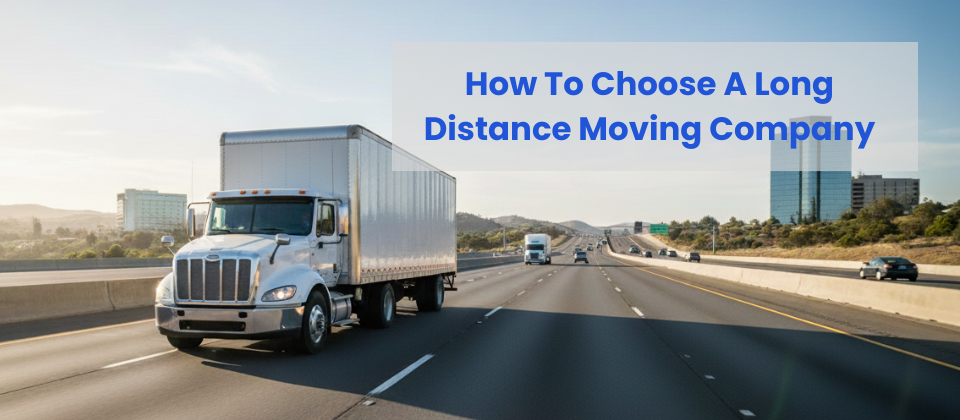
Choosing Your Move: A Cost-Benefit Analysis Beyond the Sticker Price
With a clear understanding of the cost factors, you can now evaluate the three main approaches to a long-distance move. The choice isn't just about the initial price; it's a balance of money, time, effort, and risk. The DIY long distance move cost vs professional mover cost is a more complex comparison than it first appears.
Full-Service Professional Movers
Cost Profile:
Highest upfront price. Full service long distance moving costs encompass all labor for packing, loading, driving, unloading, and unpacking, providing a comprehensive service package.
Benefits:
This is the "peace of mind" option. The moving company handles every aspect, dramatically reducing your stress and physical effort. Professional packing minimizes the risk of damage, and your shipment is protected by the company's valuation coverage. For a large home, the efficiency of an experienced crew can save you days or even weeks of personal effort.
Drawbacks:
The primary drawback is the cost. It is the most expensive option, but for many, the value delivered in time and stress reduction is well worth the investment. You also have less control over the exact delivery window unless you pay for expedited service.
DIY Long Distance Move (Rental Truck)
Cost Profile:
Appears to be the cheapest way to move long distances on the surface. However, the moving truck rental cost for a long distance is just the beginning.
Benefits:
You have complete control over your schedule and budget. You can pack and move at your own pace.
Drawbacks:
The hidden costs add up quickly. Consider the U-Haul cost for cross country move or Penske truck cross country cost, then add fuel (which can easily exceed $1,000 for a large truck), insurance for the truck and your goods, equipment rental like dollies and pads, tolls, food, and lodging along the route. Beyond money, the cost in time and physical exertion is immense. You are responsible for all the heavy lifting, the stress of driving a large truck across the country, and any damage that occurs to your belongings or the properties you're moving from and to.
Hybrid Options: Moving Containers & Freight Trailers
Cost Profile:
Mid-range, falling between a full DIY move and a full-service professional move. The PODS cost for a long distance move or the price of other long distance moving container cost options provides a balance.
Benefits:
This offers a good compromise. You handle the labor of packing and loading, which saves on cost, but you avoid driving a massive truck across the country. Companies drop off a container or trailer, you load it at your leisure, and they handle the transportation. This flexibility can be a major advantage.
Drawbacks:
You are still responsible for all the physical labor of packing, loading, and unloading. You need to have a secure and legal place to park a large container for several days, which can be a problem in apartment complexes or dense urban areas. The risk of damage from improper packing and loading still rests entirely on you.
From Estimate to Contract: How to Get a Guaranteed Price for a Long Distance Move
After you’ve researched state to state moving company prices and requested quotes, you will receive estimates. This document is the single most important tool you have to protect yourself and ensure your budget is accurate. However, not all estimates are created equal. Understanding the difference between them is critical to avoiding a bait-and-switch scenario where the final bill is thousands more than you were quoted.
Non-Binding Estimate
This is essentially a company’s guess at what your move will cost. It is not a contract. The final charges are based on the actual weight of your shipment and the services provided. If your items weigh more than the estimate, your bill will be higher. Unscrupulous movers can use a low-ball non-binding estimate to get your business, knowing they can legally charge you much more on delivery day. You should view this type of estimate as a major red flag.
Binding Estimate
A binding estimate is a written agreement that guarantees the total cost of the move in advance, based on a detailed inventory of the items you are moving. As long as you do not add any items to the shipment or request additional services, the price you are quoted is the price you will pay. This offers much better protection than a non-binding estimate.
Binding Not-to-Exceed Estimate (The Gold Standard)
This is the best possible option for a consumer and a hallmark of a trustworthy, professional company. A binding not-to-exceed estimate, also known as a "guaranteed price" or "price protection," states that the price will not go *above* the estimate. However, if the actual weight of your shipment is *less* than the estimate, you pay the lower, corresponding price. This protects you from both unexpected price hikes and from over-estimating. When you need to get a guaranteed price for a long distance move, always ask for this type of estimate.
To get an accurate long distance moving quote, you must insist on a thorough survey. This can be done with an in-home visit or a detailed virtual survey over video call. Beware of any company offering "long distance moving quotes online" or flat rate long distance movers without first seeing your belongings. A true professional needs to see every room, closet, and storage space to create an accurate inventory and identify any potential challenges, like tight stairways or difficult truck access.
Answering Your Top Questions: Putting the Formula into Practice
Let's apply this information to answer some specific questions using realistic examples and the cost formula we've discussed.
How much does it cost to pack and move a 2000 sq ft house?
A 2000 sq ft house is typically a 3-bedroom home, which on average contains about 7,500 pounds of household goods. Let's use this as a basis for a cross country moving cost calculator example. If we estimate the cost to move a 3 bedroom house across the country (approx. 2,000 miles) at a rate of $0.70 per pound for transportation, the base cost would be 7,500 lbs x $0.70/lb = $5,250. This is just for transportation. If you add the cost of full-service packing, which can be $1,000 or more, plus potential fuel surcharges and other accessories, the total cost for moves of this size could easily be in the $7,000 - $12,000 range. This aligns with industry data showing the price for moving a 4 bedroom home state to state can be significant.
What are typical moving costs for different home sizes?
While every move is unique, we can provide some general weight and cost estimates to help with your initial planning. These are broad ranges for a cross-country move of roughly 2,000 miles.
- Cost to move a studio apartment long distance: (Avg. Weight: 2,000-3,000 lbs) - Estimated Cost: $1,500 - $3,500
- Average cost to move a 1 bedroom apartment cross country: (Avg. Weight: 2,500-4,000 lbs) - Estimated Cost: $2,000 - $4,500
- Cost to move a 2 bedroom apartment out of state: (Avg. Weight: 4,000-6,000 lbs) - Estimated Cost: $3,500 - $6,500
- Cost to move a 5 bedroom house long distance: (Avg. Weight: 10,000+ lbs) - Estimated Cost: $8,000 - $15,000+
Other Common Questions
Are long distance moves tax deductible? As of 2025, moving expenses are generally no longer tax-deductible for federal returns for most individuals. The primary exception is for active-duty members of the Armed Forces who are moving due to a permanent change of station. Always consult with a tax professional for advice specific to your situation.
How much to tip long distance movers? Tipping is not required but is greatly appreciated for a job well done. A common guideline is to tip each crew member $20-$40 per day, depending on the complexity and length of the job. For a multi-day pack and load, you would tip the origin crew separately from the delivery crew. Some people prefer to tip a percentage of the total move cost, often between 5-10% to be split among the crew.
What about international moving costs from the USA? Moving to another country is a far more complex process. Costs include not just weight and distance, but ocean or air freight, customs duties, taxes, port fees, and destination services. The price can be two to three times that of a domestic long-distance move and requires a specialized international mover.
Making the Right Choice for Your Needs
There is no single "best" way to execute a long-distance move. The right choice depends entirely on your personal priorities, budget, and circumstances. By comparing long distance moving company costs and service models, you can find the perfect fit.
The Budget-Conscious Planner
You are focused on understanding the cost formula to minimize every possible expense. Your priority is getting the best value. For you, the key is to be proactive. Start by decluttering ruthlessly to reduce your shipment weight. Get multiple binding not-to-exceed estimates to compare professional long distance movers rates. Consider handling your own packing to eliminate that service cost. Booking your move during the off-season (October through April) can also yield significant savings compared to peak moving season rates. A hybrid option, like a moving container, might be the perfect balance of savings and convenience for you.
The Overwhelmed Family
You are moving to a large household, likely with children, and your primary goal is to minimize stress and ensure a smooth, reliable transition. For you, the sticker price is secondary to the value of a seamless experience. A top-tier, full-service moving company is your best investment. Prioritize companies with a long history of reliability and excellent customer service. Insist on an in-home survey and a binding not-to-exceed estimate. The cost of professional packing is an expense you should strongly consider; it not only saves you immense time but also ensures your valuables are properly protected. The peace of mind that comes from knowing every detail is handled by professionals is priceless.
The Corporate Relocator
You are moving for a new job, and your company may be covering the expenses. Your priorities are efficiency, professionalism, and clear, itemized billing for reimbursement. You need a reliable partner who can execute a flawless move so you can focus on starting your new role. Look for a well-established national moving company with a dedicated corporate relocation department. A single point of contact who can manage the entire process is a huge asset. A binding not-to-exceed estimate is essential for your employer's budgeting, and services like unpacking and debris removal will help you get settled and productive in your new home as quickly as possible.
Ultimately, understanding how much a long distance move costs comes down to understanding the formula: Weight + Distance + Services = Your Final Price. By demanding transparency, getting a binding not-to-exceed estimate, and choosing a service model that aligns with your priorities, you can approach your move with confidence and clarity. For over 140 years, since our founding in 1881, E.E. Ward Moving & Storage has been built on a foundation of transparency and trust. If you're planning a move and need a partner you can rely on, contact our team of relocation specialists based in Columbus, Ohio, for a free, no-obligation, binding not-to-exceed estimate. Let us show you the difference a century of experience makes.

Get a Quick Estimate For Your Upcoming Move!
We are here to help! Fill out our Quick Moving Estimate inquiry form and our team will contact you soon with a free estimate. Contact the office moving company with over a century of moving experience. Whether it’s a local downtown move or long-distance relocation — including business moves — we’re ready to help.
