E.E. Ward Moving & Storage
DIY long distance moving vs professional movers: The hybrid strategy for a smarter move
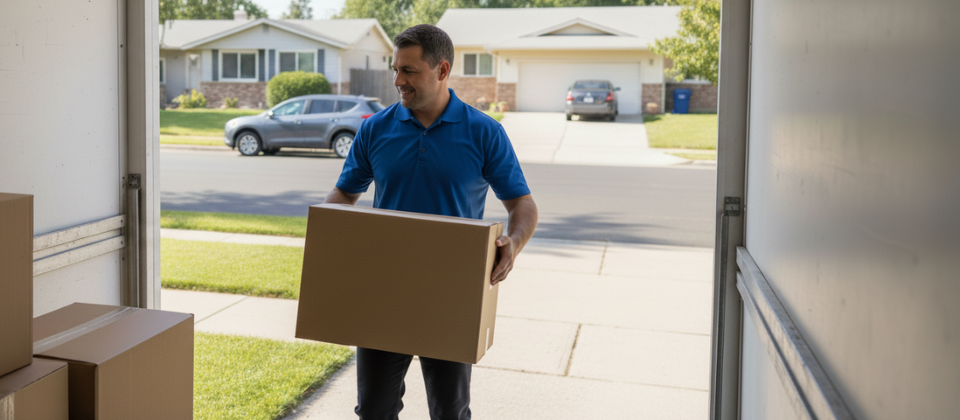

The decision between DIY moving and hiring professional movers isn't a simple binary choice. The optimal solution for a long-distance move is often a hybrid approach, where you strategically outsource high-risk tasks like heavy lifting and long-haul driving while handling lower-risk activities yourself to balance cost, safety, and effort.
Moving beyond the all-or-nothing myth
For generations, anyone planning a state-to-state moving journey faced what felt like a rigid, two-option dilemma: either rent a truck and do everything yourself to save money, or hire a full-service moving company and pay a premium for convenience. This long-standing debate over DIY long distance moving vs professional movers has framed the decision as a simple trade-off between your budget and your back. But after over 140 years in this industry, we've seen firsthand that the smartest moves are rarely all-or-nothing.
The reality of a modern cross-country move is far more nuanced. The most intelligent approach is not about choosing a side, but about deconstructing the move itself. It’s about creating a custom plan that leverages the best of both worlds. This is the "hybrid" move—a strategic blend of personal effort and professional help that optimizes your specific needs for cost, safety, and sanity. It’s a method that recognizes that while you might be perfectly capable of packing boxes of clothes, you shouldn't have to risk injury wrestling a king-size mattress down three flights of stairs or navigating a 26-foot rental truck through unfamiliar mountain passes.
This guide will help you move past the false choice. We will provide a clear framework for analyzing your move, introduce actionable strategies for building a custom plan, and give you the information you need to make a confident, informed decision.
The three paths of a long-distance move: A clear-eyed comparison
To understand the power of a hybrid solution, it's essential to first have a transparent view of the traditional options. Each path has distinct benefits and drawbacks that will appeal to different people based on their budget, timeline, and tolerance for physical labor.
The DIY move: Maximum control, maximum responsibility
The quintessential do-it-yourself move involves renting a truck from a provider like U-Haul or Penske Truck Rental, buying your own moving supplies, and personally handling all the packing, loading, driving, and unloading. This approach gives you complete control over your moving timeline and is often perceived as the most inexpensive way to move long-distance.
However, the initial quote for a rental truck rarely reflects the full picture. The true DIY moving costs include not just the truck rental, but also fuel, mileage, moving equipment rental (like an appliance dolly or furniture pads), and insurance. Beyond the monetary costs, there are significant non-monetary variables: the time commitment required for packing and driving, the immense physical labor and strain, and the risk of driver fatigue on a multi-day journey. The potential for damage to belongings due to improper loading is also a serious consideration.
The full-service professional move: The gold standard of convenience
On the other end of the spectrum are the full-service movers. When you hire an established company, a professional team handles every aspect of the relocation. This includes packing and unpacking services, furniture disassembly and reassembly, loading and unloading, and transportation. With licensed and insured movers, you also gain peace of mind through moving insurance options like Full Value Protection, which ensures your belongings are repaired or replaced if damaged.
The primary benefit is, without a doubt, convenience and peace of mind. For busy families or professionals, this can be invaluable. The downside is the cost. It is the most expensive option, and as prices have risen, some providers are tailoring their premium, white glove moving services more toward affluent households. According to industry analysis, this has occurred as demand has fallen among lower-income families who are priced out of the market. While a full-service move offers the highest level of security and ease, its price tag puts it out of reach for many.
The hybrid move: Strategic outsourcing for a balanced approach
The hybrid move is the middle path, designed for the strategic optimizer. It involves identifying the parts of the move that carry the most risk and effort and outsourcing only those tasks. For instance, combining professional services with DIY is an effective solution; you might pack all your own boxes but hire moving labor help just for the heavy lifting. This approach allows you to control your budget without shouldering the entire physical burden of the move.
The key benefit is customization. You pay for the professional help you truly need and save money by handling the rest. The main drawback is that it requires more moving day coordination than a full-service move. You become the project manager, responsible for scheduling the rental truck, the labor, and ensuring all the pieces of your moving timeline fit together.
Key decision factors: Analyzing your move through four critical lenses
To decide which path is right for you, it's crucial to evaluate your move based on the factors that matter most. Here’s a breakdown comparing the three approaches across four key areas.
Total cost and budget
The cost is often the first thing people consider. While a DIY rental truck seems cheapest upfront, the final bill can be much higher once you add fuel, insurance, and supplies. Research shows the average cost for a long-distance move with hired help is $9,140, while a DIY truck rental can range from $100 to $1,500 for the truck alone. This illustrates the significant cost gap a hybrid approach can help manage. A hybrid move allows you to find a middle ground, potentially cutting the cost of a full-service move by more than half while avoiding the all-in costs and risks of going it alone.
Convenience and labor involved
This is where the difference is most stark. A DIY move requires weeks of your time and an enormous amount of physical effort. A full-service move eliminates nearly all the labor, freeing you to focus on your family or job. A hybrid move lets you choose your level of involvement. If you don't mind packing but dread lifting, you can outsource the labor. If you don't mind lifting but hate packing fragile items, you can hire packers for just your kitchen and electronics. It’s about investing in convenience where it provides the most value to you.
Safety of belongings
Professional movers are trained in proper techniques for packing, lifting, and loading to prevent damage. An experienced long-haul mover knows how to pack a truck so items don't shift and break over hundreds of miles. They also carry robust insurance. In a DIY move, you assume all the risk. If you drop a box of heirlooms or scratch a priceless antique, the cost of repair or replacement falls on you. Hybrid options, like using a moving container service, can mitigate some risk, but professional loading and packing services provide the highest level of protection for your items.
Time and scheduling
A DIY move consumes a significant amount of your personal time, including potential time off work for packing and the multi-day cross-country drive. A professional moving company operates on a much more efficient schedule, often completing the loading in a single day. Hybrid moves offer flexibility. For example, using moving container services like PODS or U-Pack allows you to pack and load over several days or weeks, which can reduce the stress of a condensed moving timeline.
The Risk/Effort Matrix: A framework for your hybrid move
The core of a successful hybrid move is deciding what to do yourself and what to pay for. The "Risk/Effort Matrix" is a simple mental model to guide this decision. Categorize every task associated with your move into one of two buckets: tasks that are high-risk and high-effort, and those that are low-risk and low-effort.
High-risk, high-effort tasks to outsource
These are the tasks that have a high probability of causing injury, property damage, or extreme stress. They are the prime candidates for outsourcing to professionals.
- Heavy Lifting: Moving large furniture (sofas, dressers), appliances (refrigerators, washers), and specialty items like pianos. The risk of personal injury or damage to the item and your home is extremely high.
- Long-Haul Driving: Operating a large rental truck over a long distance is mentally and physically exhausting. It requires navigating different state traffic laws, weigh stations, and challenging road conditions—all in a vehicle you're unfamiliar with.
- Packing Fragile Items: Your delicate china, artwork, mirrors, and expensive electronics require specific materials and techniques to be packed securely. The cost of professional packing is often less than the cost of replacing these items.
- Furniture Disassembly and Reassembly: Properly taking apart and reassembling complex furniture like bed frames or modular desks can be tricky. Professionals have the right tools and experience to do it quickly and without damage.
Low-risk, low-effort tasks to insource
These are the tasks you can safely and easily manage yourself to save money. They require time but carry minimal risk of injury or damage.
- Decluttering: Sorting through your belongings to sell, donate, or discard items before the move is a task only you can do.
- Packing Non-Breakables: Boxing up clothes, linens, books, and items in your garage or closets is time-consuming but straightforward.
- Sourcing Moving Boxes and Supplies: Gathering moving supplies can be done on your own schedule.
- Cleaning: Handling the final clean-out of your old home and preparing your new one.
How to build your custom hybrid move: Actionable strategies
Once you've used the matrix to decide what to outsource, you can choose from several hybrid models to build your perfect move. The industry has evolved to offer a variety of self-service moving and a la carte options.
Option 1: Moving container services (The "You-Pack, We-Drive" model)
Companies like PODS and U-Pack offer a popular hybrid solution. They deliver a large moving container to your home, you pack and load it at your own pace, and then they pick it up and transport it to your new address. This eliminates the stress of long-haul driving. For an even more effective hybrid, you can hire local moving labor to load the container for you, ensuring your items are packed tightly and safely for transit.
Option 2: Rental truck with moving labor help
This strategy addresses the most physically demanding part of a DIY move. You still rent the truck and handle the driving, but you hire a professional crew for a few hours at your origin and destination to do the loading and unloading. The Better Business Bureau notes that you can always hire professional movers to help you load and unload the truck most safely. This helps protect your belongings, saves your back, and keeps the move safer overall.
Option 3: Freight moving companies
If you're moving a small apartment or just a few large pieces of furniture, freight services can be a cost-effective option. You pack your items onto a pallet or into a crate, and a freight company transports it with other commercial goods. This is often cheaper than hiring a dedicated moving company for a small load. As experts at move.org point out, a mover can achieve a blend of convenience and affordability by mixing services, such as hiring movers for some furniture while transporting other items themselves. This same logic applies to using freight for the big items and your car for the small ones.
Common questions and red flags answered
Navigating the moving industry can be confusing. Here are straightforward answers to some of the most common questions we hear.
Answering your top moving questions
So, is it cheaper to DIY or hire movers? On paper, yes, a strict DIY move has the lowest initial cost. However, when you factor in hidden moving fees, fuel, your time, and the potential cost of damaged goods, the gap narrows. The most inexpensive way to move long-distance is a carefully planned hybrid move that minimizes risk. And is it better to move yourself or hire movers? The best choice depends entirely on your priorities. If your top priority is budget, a DIY or hybrid move is likely your answer. If you prioritize time, safety, and convenience, professional movers are the superior choice.
Red flags to watch for when hiring movers
If you decide to hire any level of professional help, it's critical to choose a reputable company. Be wary of any company that:
- Demands a large moving deposit. Reputable movers typically collect payment upon delivery. A large deposit is a major red flag for common moving scams.
- Refuses to provide a written binding estimate. You should receive a formal quote, or a "bill of lading," that clearly outlines the costs. A vague verbal quote is not a contract.
- Cannot provide proof of being licensed and insured. Legitimate interstate moving companies are regulated by the Department of Transportation and must have a USDOT number.
- Has a weak professional presence. If the company answers the phone with a generic "movers" or has no physical address listed, proceed with caution.
Making the right choice for your needs
Ultimately, there is no single "best" way to move. The right approach is the one that aligns with your budget, timeline, and personal preferences. Here is some tailored advice for three common types of movers.
For the budget-conscious mover
If your primary goal is to save money, a mostly DIY approach is your best bet. Rent a truck for transportation, pack your own belongings, and enlist friends and family to help with the loading. However, strongly consider a small hybrid investment: hire professional moving labor for two hours to load just your heaviest furniture. This small expense can prevent a costly injury or damage to your most valuable items.
For the time-pressed professional or family
If you have a demanding job or young children, your time and energy are your most valuable assets. A full-service move is an excellent investment in your well-being, allowing you to focus on a smooth transition for your family or career. A close alternative would be a comprehensive hybrid move: hire a company for full packing and loading services, but use a more affordable moving container for transport.
For the strategic optimizer
If you're comfortable with project management and want to find the perfect balance of cost and convenience, the custom hybrid move is designed for you. Use the Risk/Effort Matrix to perform a cost-benefit analysis on every task. You might find that packing your own books and clothes saves you a thousand dollars, while hiring pros to crate your art and move your grand piano saves you from a priceless loss. You can mix and match services to create a truly bespoke moving plan.
An intelligent long-distance move is about thoughtful planning, not just heavy lifting. By moving beyond the outdated choice of all-or-nothing, you can design a relocation that fits your life and your budget. With 145 years of experience helping families and businesses navigate the complexities of moving, the team at E.E. Ward Moving & Storage has the expertise to guide you. From our home base in Columbus, Ohio, we help orchestrate moves of all sizes across the country. If you need a trustworthy partner to help you build the right plan, contact our expert team today for a free, no-obligation quote and a personalized assessment of your needs.

Get a Quick Estimate For Your Upcoming Move!
We are here to help! Fill out our Quick Moving Estimate inquiry form and our team will contact you soon with a free estimate. Contact the office moving company with over a century of moving experience. Whether it’s a local downtown move or long-distance relocation — including business moves — we’re ready to help.
