
E.E. Ward Moving & Storage
New South Ambition vs. Old South Charm: Why North Carolina vs. South Carolina Is More Than a Border War


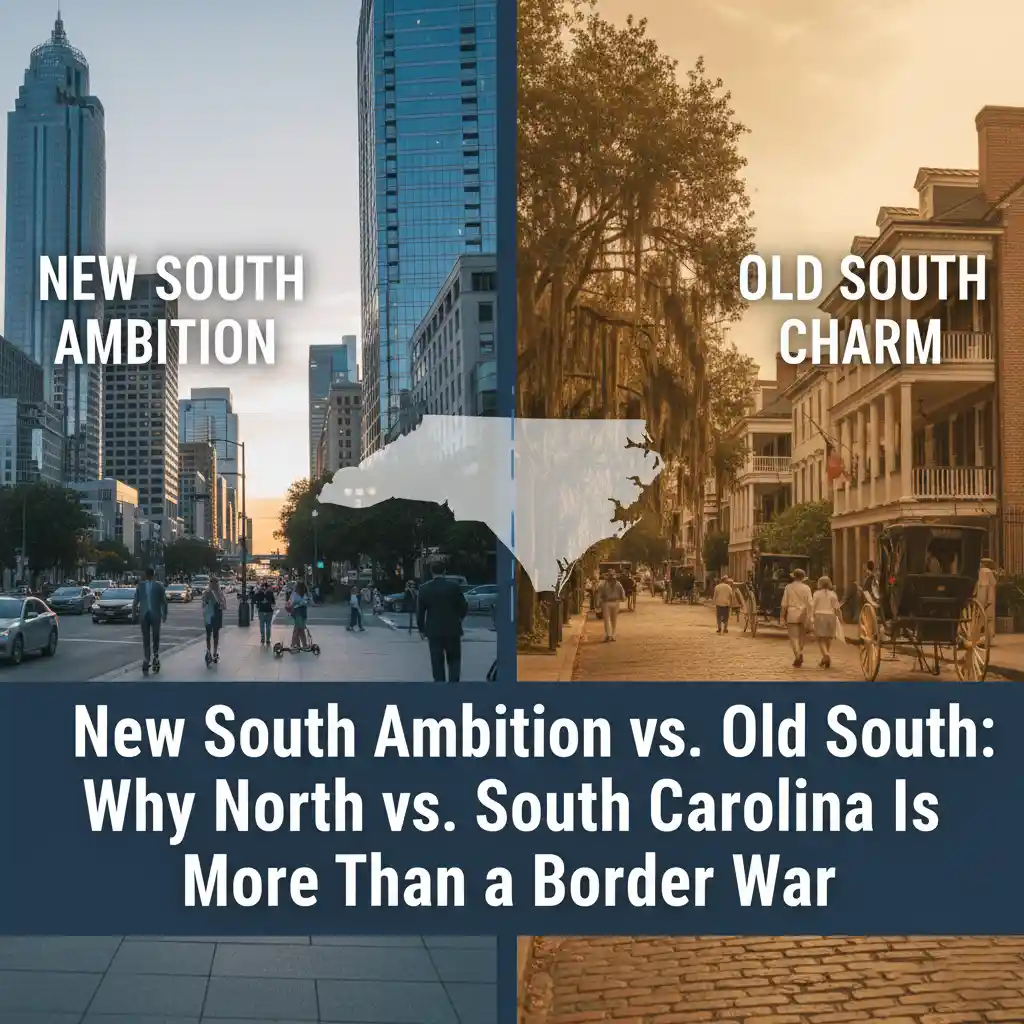
The question of choosing between North and South Carolina is more than a simple line on a map; it's a decision between two profoundly different visions of the American South. While many comparisons stop at climate and cost of living, the true distinction lies in their cultural identities. The choice isn't just about geography—it's about ethos. You're deciding between the ambitious, fast-paced engine of the "New South" found in North Carolina and the graceful, unhurried guardian of "Old South" charm that defines South Carolina.
This is the fundamental difference: North Carolina is a state in constant, forward motion, driven by the intellectual horsepower of the Research Triangle and the financial might of Charlotte. South Carolina, in contrast, is a state that honors its deep past, where life moves at the gentle pace of the Lowcountry tides and history is a living, breathing part of the landscape.
This guide moves beyond surface-level stats to explore this core dichotomy. We'll examine how these distinct identities shape everything from their economies and lifestyles to the very soil of their famous sports rivalries, helping you answer the ultimate question: which Carolina truly aligns with your vision for home?
Economic Engines & Identity: A Tale of Two Trajectories
To understand the Carolinas today, you must first understand their divergent economic paths. This isn't just a list of industries; it's the story of how one state embraced rapid modernization while the other curated its historical assets into a powerful economic force.
North Carolina: The "New South" Powerhouse
North Carolina is the embodiment of the New South, a state that pivoted from traditional industries like tobacco and textiles to become a national leader in knowledge-based sectors. North Carolina’s modern economy is led by diverse sectors including financial services, pharmaceuticals, and technology¹. This transformation is most evident in two key areas:
- The Research Triangle Park (RTP): This Raleigh-Durham-Chapel Hill nexus is one of the world's most prominent high-tech research and development parks. It's a magnet for scientists, engineers, and entrepreneurs, fueling a culture of innovation and high-paying jobs.
- Charlotte's Financial Hub: As the second-largest banking center in the United States after New York City, Charlotte gives the state a dynamic, corporate energy. This financial prowess attracts ambitious professionals and drives a fast-paced urban lifestyle.
The results of this strategy are stark. With nearly twice the population of its southern neighbor, North Carolina's annual economic production is 150 percent larger. Further, since 1997, North Carolina's annual economic production has grown by 46%, compared to 32% in South Carolina, highlighting its more aggressive growth trajectory.
South Carolina: The Guardian of "Old South" Soul
South Carolina's economic identity is deeply intertwined with its history. While it boasts a powerful modern manufacturing sector, particularly in automotive (BMW) and aerospace (Boeing) around Greenville and Spartanburg, its soul—and a massive part of its economy—is rooted in tourism and preservation. This connection to the past is no accident. The southern part of the original Carolina colony, which became South Carolina, developed an economy based on the cultivation of rice and indigo, building wealth through the labor of enslaved people². This history, while complex and painful, created the architectural and cultural landscape that now draws millions of visitors.
- Charleston & The Lowcountry: Charleston is a living museum, where cobblestone streets and antebellum architecture are not just tourist attractions but the very fabric of the city. The economy thrives on providing an authentic experience of Old South grace and charm.
- Coastal Tourism: From the family-friendly shores of Myrtle Beach to the manicured golf courses of Hilton Head Island, the Palmetto State has perfected the art of leisure. The economy is built on a promise of relaxation and a slower, more deliberate pace of life.
The economic comparison of the Carolinas shows a clear choice: the Tar Heel State for diverse, high-growth career opportunities in tech and finance, and the Palmetto State for a strong manufacturing base combined with a world-class tourism industry built on historic charm.
A Tale of Two Lifestyles: Hustle vs. Hospitality
The economic identities of the Carolinas directly translate into the day-to-day lifestyles of their residents. The pace, the priorities, and the weekend activities diverge significantly, reflecting the "New South" vs. "Old South" ethos.
North Carolina: The "Work Hard, Play Hard" Mentality
Life in North Carolina's major hubs moves faster. There's a palpable energy in cities like Raleigh and Charlotte, a "work hard, play hard" culture fueled by ambition. Weekends are not just for rest but for experience. Thanks to its unique geography, a resident can be hiking a trail in the Blue Ridge Mountains near Asheville one day and surfing waves on the Outer Banks the next. This variety fosters a dynamic, active lifestyle where the options for recreation are as diverse as the job market.
South Carolina: The Art of "Lowcountry Leisure"
In South Carolina, particularly along the coast, life slows down. The culture is less about what you do and more about how you live. It's the "Lowcountry leisure" of porch-sitting with sweet tea, leisurely boat days on the Intracoastal Waterway, and community oyster roasts. The lifestyle is defined by a deep appreciation for tradition, hospitality, and taking the time to savor the moment. While cities like Greenville have a growing buzz, the dominant cultural frequency across the state is one of relaxed, graceful living.
Geography as Destiny: Mountains and Coasts
The distinct landscapes of the two states are not just backdrops; they are active participants in shaping culture and lifestyle.
North Carolina: A Four-Season Playground
The Tar Heel State boasts one of the most diverse geographies on the East Coast. From the highest peaks east of the Mississippi River in the west to the iconic barrier islands in the east, this mountain-to-coast landscape creates a true four-season environment. This variety dictates a lifestyle rich with options: skiing in the winter, admiring vibrant foliage in the fall, hiking in the spring, and enjoying the beaches in the summer. This fosters a culture that is adaptable, varied, and constantly exploring.
South Carolina: A Singular Focus on Sun and Shore
South Carolina is defined by its coastal plains and subtropical climate. While the Upstate region offers rolling hills, the state's identity is overwhelmingly tied to its coastline. The dominant geography creates a singular cultural focus on beach life, marshlands, and waterside recreation. This is a paradise for those who want to perfect their golf swing year-round or spend their weekends on the water. The best beaches in North Carolina vs. South Carolina debate often comes down to this: NC offers wilder, more rugged barrier islands, while SC offers wide, resort-style beaches with warm water for a longer season.
The Rivalry as a Cultural Barometer: More Than a Game
Nowhere is the cultural clash between "New South" ambition and "Old South" pride more visceral than in the athletic arena. The "Border War rivalry" is a symbolic battleground for these two identities. When you see a UNC vs. South Carolina game summary, you're reading the latest chapter in a long story.
The University of North Carolina (UNC) represents the Tar Heel State's identity perfectly: an established, "blue-blood" institution with a storied history of academic and athletic excellence, particularly in basketball. It carries an air of expectation and polished success.
The University of South Carolina (USC) Gamecocks embody the Palmetto State's spirit: a passionate, scrappy, and fiercely proud competitor that has recently ascended to national dominance, especially in football and women's basketball. There's a chip on the shoulder, a feeling of earning respect, that resonates with its fanbase.
This dynamic is vividly illustrated in the women's basketball rivalry. The rise of the South Carolina Gamecocks under coach Dawn Staley to become a perennial championship contender has created one of the fiercest matchups in the sport. The entire state follows the South Carolina Gamecocks women's basketball schedule for 2025 with bated breath. Events like the 2024 NCAA Tournament UNC vs South Carolina game in the March Madness Sweet 16 are monumental cultural events. Fans comb through the South Carolina vs UNC women's basketball box score, analyzing every point, especially the performances of key players. For instance, stats from players like Tessa Johnson or highlights from MiLaysia Fulwiley become legendary. A post-game analysis of the NC vs SC contest is about more than just points; it’s about state pride. The talk of a South Carolina undefeated season adds immense pressure and excitement, making the rivalry one of the premier ACC vs SEC basketball matchups.
Answering Your Core Questions: NC vs. SC
With this cultural framework in mind, let's address the practical questions that often drive the decision-making process for those considering a move.
Why did the Carolinas split into North and South Carolina?
This is a crucial question that gets to the heart of their differences. While they were once a single British colony, their paths diverged early on. North and South Carolina have officially been separate entities since 1712, allowing for the development of distinct histories and cultures. The South, with its deep-water harbor at Charleston, developed a wealthy, aristocratic society built on large plantations. The North was populated more by smaller-scale farmers. These foundational economic and social differences made a split almost inevitable. This history culminates in moments like April 12, 1861, when the first shots of the Civil War were fired by South Carolinians at Fort Sumter in Charleston's harbor, cementing its distinct identity. The border itself remained a point of contention for centuries, leading to a cooperative effort to re-survey the entire 334-mile-long boundary between North and South Carolina that began in 1995 and was completed in 2013³.
Is it better to live in South Carolina or North Carolina?
There is no single "better" state; there is only the state that is better for you.
- Choose North Carolina if: You prioritize career growth in cutting-edge industries, value access to world-class universities and healthcare, enjoy a four-season climate with diverse outdoor activities from mountains to sea, and thrive in a faster-paced, ambitious environment. It's often the preferred choice for young professionals and families seeking a blend of opportunity and quality of life.
- Choose South Carolina if: You seek a more relaxed, slower pace of life, a lower cost of living, milder winters, and are drawn to historic charm and coastal living. It's a top destination for retirees and anyone who prioritizes leisure, community, and a deep connection to place. The debate over North Carolina vs South Carolina for retirement often hinges on these lifestyle factors.
Which state is more affordable, NC or SC?
Generally, South Carolina has a lower overall cost of living than North Carolina. This is a significant draw for many.
- Housing: The real estate market in NC vs SC typically shows lower median home prices in South Carolina. However, prices in desirable coastal areas like Charleston and Hilton Head can be just as high, if not higher, than in many parts of North Carolina.
- Taxes: The North Carolina vs South Carolina taxes comparison is nuanced. South Carolina boasts some of the lowest property taxes in the nation, making it very attractive to homeowners and retirees. North Carolina has a flat state income tax, which can be simpler, while South Carolina has a progressive income tax. Sales taxes are comparable, though they vary by county in both states.
While South Carolina is often more affordable on paper, the higher average salaries in North Carolina's major metro areas can offset the difference in living costs. It’s essential to compare specific cities, like Raleigh vs. Columbia or Charlotte vs. Charleston, to get a true financial picture.
The Final Verdict: Choosing Your Carolina
The choice between the Tar Heel State and the Palmetto State is a choice of identity. Do you see yourself thriving in the dynamic, forward-looking culture of North Carolina, with its bustling cities and mountain retreats? Or are you called by the genteel rhythm of South Carolina, where history lines the streets and the coast beckons you to slow down?
One offers the promise of the New South, a place of growth, innovation, and boundless activity. The other preserves the enduring soul of the Old South, a place of grace, tradition, and timeless leisure. Both are compelling, both are beautiful, but only one is the right Carolina for you.
Are you Planning a Move to or Within North Carolina?
E.E. Ward Moving & Storage, your trusted and reliable North Carolina movers. Our experienced team is dedicated to making your move smooth and hassle-free. Whether you’re relocating your home or office, we have the expertise and resources to handle all your moving needs. Contact us today for a stress-free moving experience with the best movers in North Carolina. Visit our website to learn more about our Charlotte moving company or Raleigh moving company services and get a free quote. Experience the difference with E.E. Ward Moving & Storage – your trusted partner for all your moving needs in North Carolina.
#Updated October 2025
Sources:
- https://cals.ncsu.edu/news/you-decide-north-carolina-vs-south-carolina-is-there-an-economic-winner/¹
- https://www.dncr.nc.gov/blog/2024/01/19/north-carolina-south-carolina-o-22²
- https://rfa.sc.gov/programs-services/geodetic/scboundary³

Get a Quick Estimate For Your Upcoming Move!
We are here to help! Fill out our Quick Moving Estimate inquiry form and our team will contact you soon with a free estimate. Contact the office moving company with over a century of moving experience. Whether it’s a local downtown move or long-distance relocation — including business moves — we’re ready to help.
